
Gaelic Clans and Cliù
ancestral article

European civilization was fashioned at the hands of robust kin networks bound together by a complex honor culture. The Greek city-states were originally founded in such a manner; early Rome rose to power through this method; the famous Vikings and Saxons were bound together through honor and oaths as they colonized the northern world. However, in this article, I will focus on the Gaels, since their ancient kin networks (the clan and túath) lasted far longer than any other European group, and many folks misunderstand what clan feuds were and why they materialized. Whereas some other Europeans have mollified themselves, many Gaels have kept our ancient passion kindled in our chests, an ancient passion that other Europeans have seemingly lost as we’ve traversed deeper into modernity. Of course, even today these clans are mere memories and half-forgotten names, and the honor culture has been shamed as backwards and savage. Thus, even the Gaels suffer from modern woes, and it seems that Europe’s civilization may crumble unless each tribe can rebuild those ancient kin networks through a culture forged around honor and blood.
~ CLANS ~
The Gaelic nations were set up to resemble one giant kin network, like a great tree with roots spreading across the land into different groves, these being offpsring households. There has long been the concept of a High King that held authority over these spreading clans, but there are also debates raging over whether or not that concept ever held anything more than poetic and spiritual power, rather than direct administrative power. Regardless of these debates on the High King, there were more than a few High Kings recorded in history and mythology, and a great number of sub-kings of no lesser worth and glory. As we find in the “Críth Gablach” there were rí benn (the king of peaks) who was also called the rí túaithe (king of a túath), who was below the rí buiden (the king of bands) who was identified with the ruiri (overking), who in turn was below the rí ruirech (king of overkings). Ruling the clans, households, and families were male patriarchs known as tíesach (chieftain, leader) - a position that is shown forth in the name itself, which relates to the head of a house. Alliances and social cohesion between these chieftains and kings were based on the complex kin networks known as clans and tuaths, which helped bind Gaelic society together across geography and ancestry.
Just to make a clarifying note, sept-clans are those lesser clans which are bound to greater clans either through bonds of marriage, service rendered to the greater, or the ownership of land by the greater over the lesser. Sept-clans could be quite loyal, or wayward, all owing to the actions of the clan chieftain. Many sept-clans are related cadet-branches of older lines, thus they are simply younger scions of the progenitor’s tree - however, there are a great number of sept-clans which are truly just additions to the larger clan body through various means, and these families can sometimes drift around Scotland and Ireland, creating confusion concerning their origins or the relations between certain clans which share related sept-clans.
Etymonline gives this for “clan”:
"a family, a tribe," especially, among the Highlanders of Scotland, a form of social organization consisting of a tribe holding land in common under leadership of a chieftain, early 15c., from Gaelic clann "family, stock, offspring," akin to Old Irish cland "offspring, tribe," both from Latin planta "offshoot"
This brings to mind the blossoming seed and the growing roots, the young shoots and fresh branches, the seedling trees and new beginnings through blood and soil. The concept of the clan is why I have named my folkish apologetics book The Roots of the Tree, for the branches of the tree are made of the same stuff as the roots, and the individual person is just a member of a larger clan body. A clan with a strong root system will have healthy branches and fruitful seeds, proven through the thousands of years of European history which is utterly filled to the brim with Indo-European clans and households, though they are now scattered and diffused, and forget themselves even at the last. Gaels held onto these clans much longer than any other group for a few key reasons, and this is largely owing to our extreme isolation throughout history, and to our robust kin-networks, known as tuath.
Wiktionary gives this for the defition and etymology of “tuath”:
tuath (plural tuaths or tuatha): (historical) A tribe or group of people in Ireland, having a loose voluntary system of governance entered into through contracts by all members. From Old Irish túath, from Proto-Celtic *toutā, from reconstructed Proto-Indo-European *tewtéh₂.
Here we find that these ancient kin networks were “loose voluntary systems… entered into through contracts by all members” and this is a relatively apt description of ancient northern European society in general. Men were bound to their families, households, and tribes, but this was done on the basis of mutual gain, respect, and justice. This was an inheritance that very few people would ever willingly forgo. Etymonline gives this for a slightly different reconstructed “*teutā-”:
*teutā-, Proto-Indo-European root meaning "tribe." It forms all or part of: Deutsch; Dutch; Plattdeutsch; Teuton; Teutonic.
It is the hypothetical source of/evidence for its existence is provided by: Old Irish tuoth "people," Old Lithuanian tauta "people," Old Prussian tauto "country," Oscan touto "community," German Deutsch, Gothic þiuda, Old English þeod "people, race, nation," Old English þeodisc "belonging to the people."
This etymology proves a lot of what I am getting at in this article. These words “tuath, teuton, tribe” they are all foundational to who we are and what we are doing here. These are European concepts that directly relate to how we conceive of the cosmos, and how we interact with the world. Peoples of Europe have long understood themselves as being set in an ancestral and divine hierarchy that played out within our day-to-day lives. Prudent pragmatism led us to the creation of free societies governed by clans, tribes, chieftains, and kings. When examining the etymological connections between Gaelic clan and Latin planta, along with the Gaelic tuath to Germanic teuton, we find that these roots truly do run deep, and perhaps the Gaels can serve as a connecting root, a taproot in more ways than realized. Our great isolation may have helped us preserve certain things lost to time, and perhaps with the realization of these ancient kin networks in the modern era, the Gael can help unite Europe in ways unforeseen. At the very least, the Irish Gaels serve as a taproot from which all Western Europeans can draw blessed water from, for our clans are wide and numerous, and they include more than just isolated Gaels. There are Picts, Norse, and Anglos in our ranks - there are Welsh, Germans, and French who were touched by our tendriling roots, just to name a few. Our clannish nature can serve as a reminder to all Europeans that households include more than those people who are seen every day - it includes men and women who dwell in faraway lands, but who are bound to each other through blood and honor.
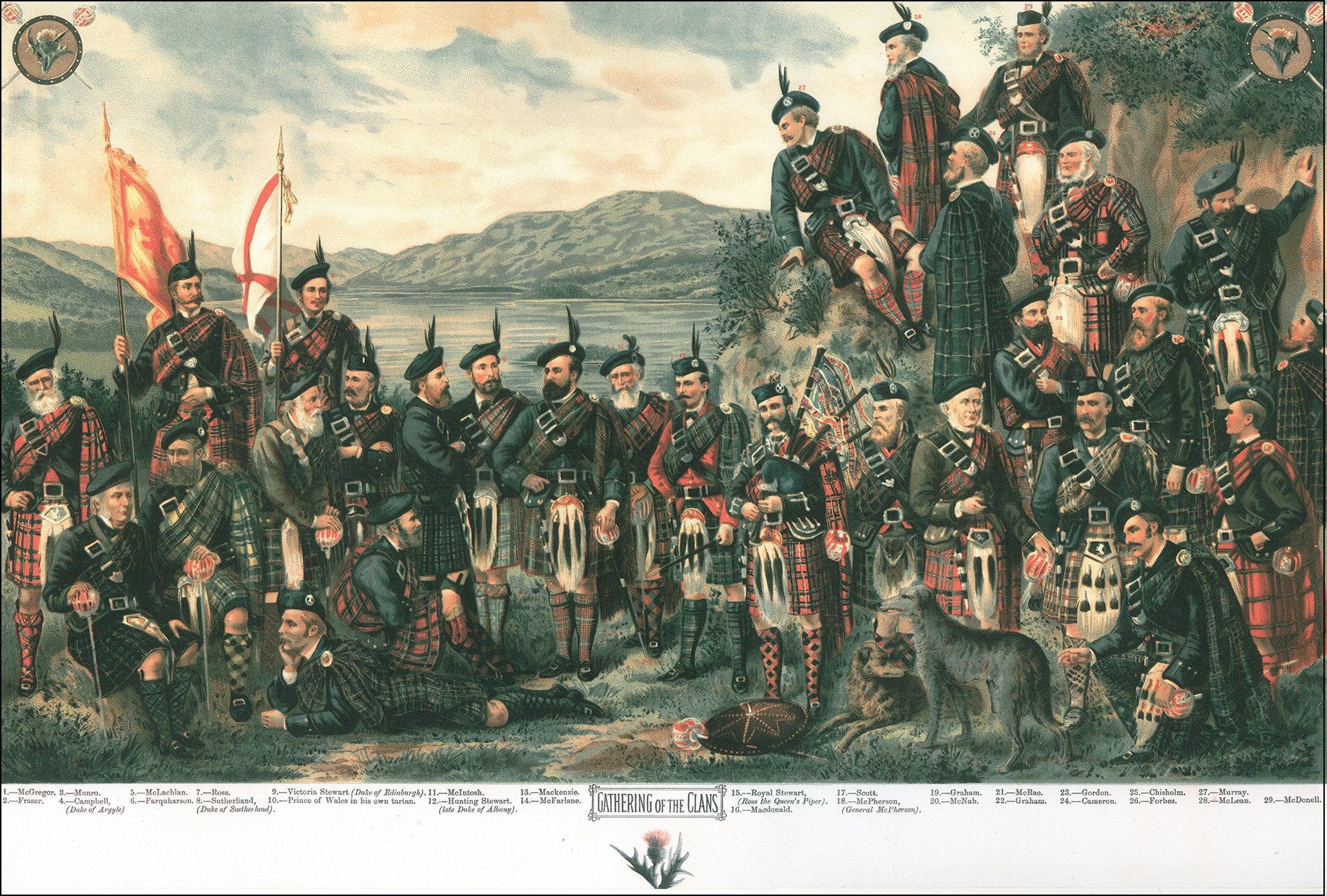
These Gaelic clans were ultimately forged through patrilineal descent, coupled with sacred oaths which bound men of different families together. Clans could be united based on the superior land ownership of mighty clans, rendered aid given in battle earning trust between households, the trusty watch of cattle and sheep from raiders, or shared religion and ancestry. From these bonds, great enmity was built over time between mighty clans such as the Camerons versus the Campbells, and great bonds were formed such as those between the MacMillans and the Camerons against their foes in Lochaber and beyond. The MacMillans were once members of the Clan Chattan Confederation, although we suffered terribly at their hands along with the Camerons due to the shared bonds between the Camerons and MacMillans, and enmity between the Chattans and Camerons, an enmity that extended to the allies of the Camerons. Such events are rife throughout Gaelic history, from Ireland to Scotland, and it is all due to how clans and their sept-clans operated, a system based in law and religion.
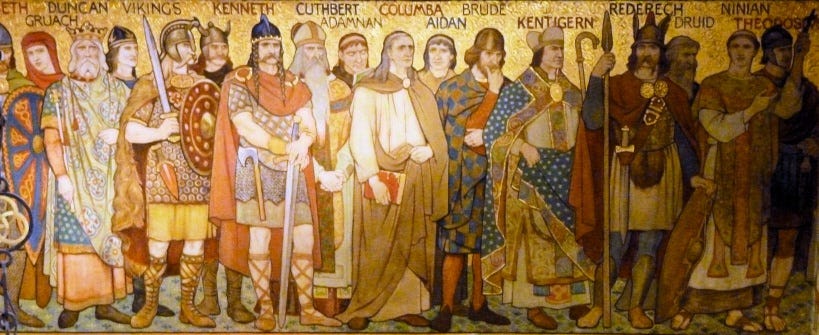
The colonization of Dal Riata by the Gaels was a powerful event that shook history, forever entrenching Gaelic culture and genetics in the lands that would come to be called Scotland. The Gaelic Dal Riatans were split up into three major cenéls (clans), and these three clans spread out into different areas of Britain, mixing with and conquering Britons and Picts before establishing new petty-kingdoms. In all this time, they held lands in Northern Ireland and were constantly involved in the wars and turmoils of the homeland. When the Norse-Vikings arrived, the Gaels suffered greatly and Dal Riata collapsed, and Ireland languished. The Gaels of Britain utilized their ties of kinship with the Picts to forge a new alliance under the uniting banner of Alba, and the Scots were born under an alliance between many clans and minor kingdoms. When the Norse-Gael Kingdom of the Isles fell, the deposed monarchs of Moray worked with the descendants of Somerled to form the Lordship of the Isles, and a new internal petty-kingdom was set up with deep ties stretching across Scotland and Ireland. These ancient bonds were constantly affirmed with the MacDonalds, Bruces, and Stewarts, who often used Norse-Gael gallowglas of the Hebrides, or Gaelic redshanks of the same region, and more often than not utilized Irish mercenaries in their campaigns. In fact, it could be argued that these ancient Indo-European ideas on kinship shaped all of Europe through the Scots and the English, for their crowns ended up uniting through complex means of royal kinship, and this spelled great doom and misery for all of Europe when such a perfidious union collapsed.
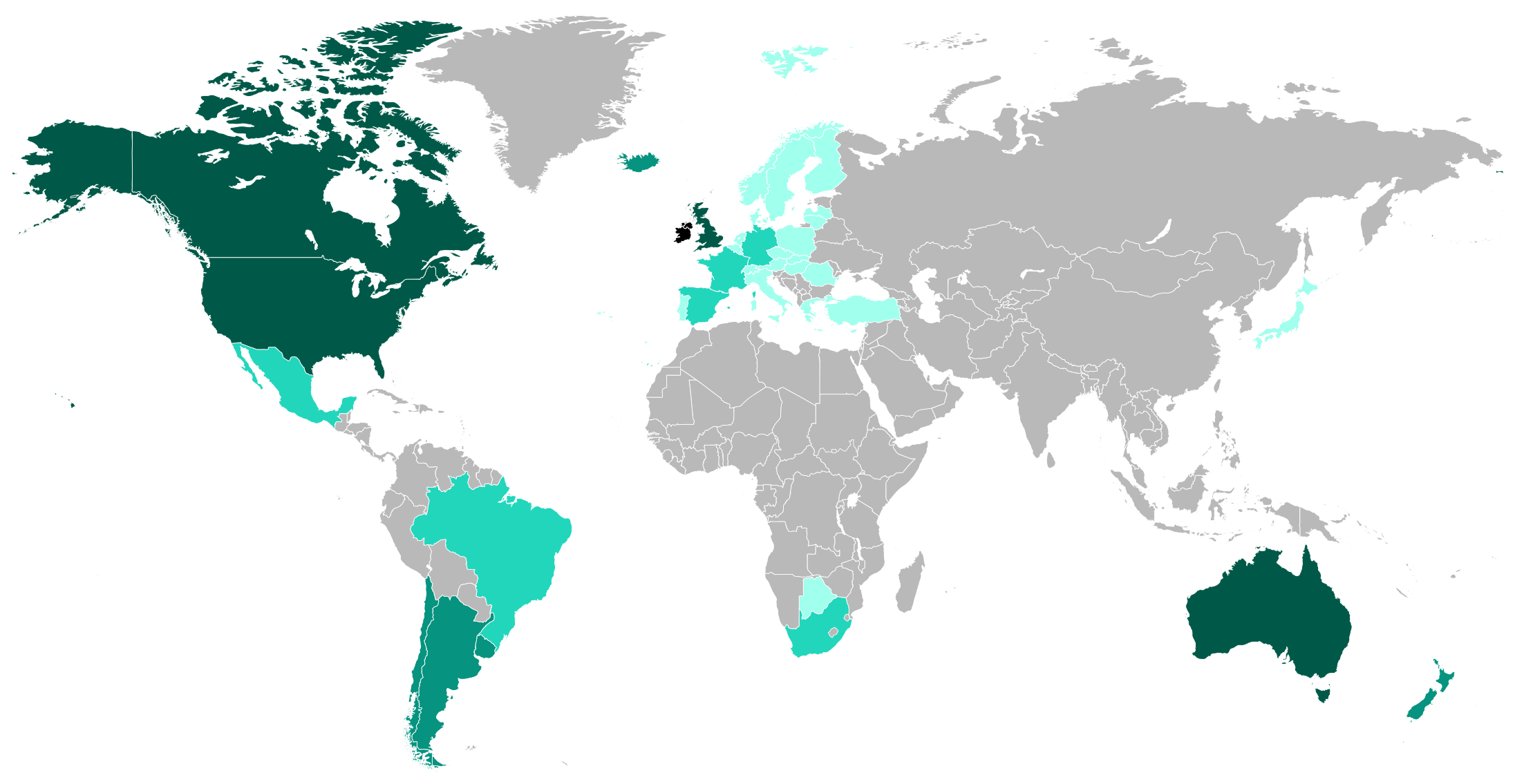
In our great exile, the diaspora of the Gaels have retained varying levels of these bonds. Highlanders and Borderers made their way to Appalachia and Nova Scotia, and Irish settled across North and South America in little pocketed communities. Australia absorbed large amounts of our people through the penal colony there, and even more have left for new lands in more recent times. The Gaelic people are scattered and diffused, but in our new lands we always name things with “funny Gaelic words” and placenames become strange to everyone except us. Now, even our own names are being taken by foreigners, and our culture is bought and sold every St. Patrick’s Day, yet the diaspora does not get to fully live into their identity without cries from all corners of racism, appropriation, and whatnot. None of this stops the folkish Gael, and there are instances of American and Australian Gaels assisting their brethren back in Ireland during the Rising and the Troubles. These ancient bonds must be affirmed in new ways, lest we lost everything to integration with the world. If Ireland is too small for the world, then so are our clans. We have spread out too far - it is time to return to our roots.
~ Cliù ~
The Gaelic kin groups were held together through strict honor cultures. In Ireland, this manifested in numerous ways ranging from hospitable pleasantry visited upon all relations, to those dreaded clan feuds fought between mighty warriors. In Scotland, this manifested in bloody clan duels which ended entire bloodlines, or scattered them abroad to the Hebrides and Ireland where stronger blood ties could be found for needy Gaelic clans. In the sagas and bardic poems, we find that these feuds and strict honor rules were divine in nature, played out amongst the Gods and Goddesses just as it should be with mankind. Lugh, for example, slew his wife’s adulterer, Cermait, and was slain by his sons in return. Feuds such as this were done for honor, and the gifts that honor brings, even if such gifts are often too small for our own hands to hold with joy and peace of mind.
Cliù is a Gaelic word defined as "fame, renown, praise, good character or reputation" and it directly relates to social standing and one's place within the natural order of the household, the clan, the community, and even the larger nation. It could descend from the PIE root *kly- which is reconstructed to mean "to hear, to proclaim" – which insinuates that it means one's reputation being spread through hearing about their deeds. This is further reinforced when we examine possibly related Indo-European words such as the Greek kleis "closing off" or "guarding one's reputation", Old English hlýdan "to listen", and Sanskrit klyā "to call out" – all of which point to the different connotations inherent to the word.
The Greek kleos is a direct cognate as well, and this definition insinuates more than what was been outlined to include "credit, rumor, and glory" which brings to mind the spoken word oft repeated from the lips of bards to the ears of peasants extolling the virtues of their patrons. In this sense, it can be clear that a man would expect his kleos if he deserved it, and he would be keen to stop anyone from spreading untoward rumors which might harm his kleos. There is a tangentially related concept within the Norse and Germanic world known as hamingja, or group-luck, happiness, or fortune. This concept relates to the soul-complex and the ancestral body, but it is inheritable as well, and can be influenced by the words of living men. For Gaels, bardic praise was the easiest way to move up the social hierarchy, and there were many bards who were quick to praise the actions of warriors, champions, chieftains, and kings if those actions produced good ends. Truly, they would often still praise their chieftains and kings even if their actions did not produce good ends, and it makes sense why the bards would call out and safeguard the reputation of their benefactors. Maintaining one's social reputation and placement within the community would be vital to those with much to lose, such as kings and chieftains.
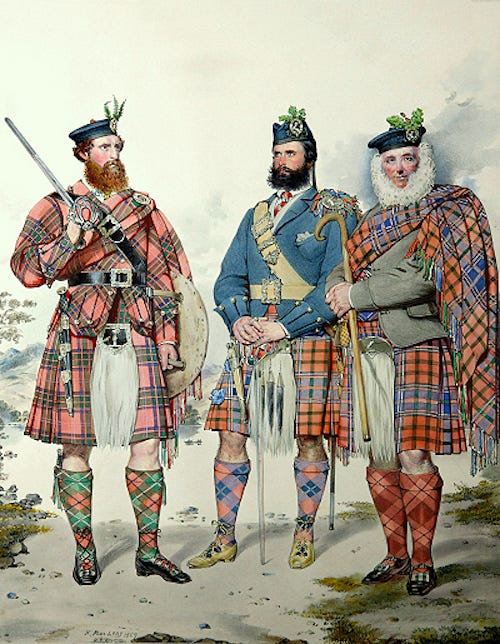
However, cliù goes beyond simple boasting and overture to reach a deeper wellspring – that being respect, social honor, and familial praise. When the cliù of a man is increased, so too is the cliù of his family, for by proxy are they deemed respectable and worthy of a place within the community. A whole clan should seek a better cliù so that the entire household, ancestors and all, can be enhanced and further praised. When the reputation of one is raised, all who are associated with him are appraised in a similar light, and their place in the community is affirmed. This aspect of cliù is important, for this virtue does not just relate to one's reputation, but also one's purpose and meaning within their community. If they are honorably providing a required service, then their cliù will naturally increase and their presence will be deemed a social boon and blessing. Iain Mac a’ Ghobhainn (Iain Crichton Smith) describes cliù like this in his book "Real People in a Real Place":
The Highlander has a concept of cliù, which roughly means ‘reputation,’ and such a concept implies that a man who has it may be considered useful to the community, not glorified, but respected. . . . . he wishes to be known as one who belongs to a community and who does service to that community.
What man doesn't want to be accepted by his community? Only atomized men of the modern world have this strange desire to isolate themselves from their tribes and race, going so far as to reject patriotism and nationalism, the very last bastions for safe and prosperous communities. In the old world, rejection by kith and kin was basically a death sentence, for other households are liable to keep you at arm's length, while wild nature will ever seek to smother and devour you. Refusing to fight for clan, family, or nation would have summoned the wrath of righteous kinsmen who require strong arms for the shield wall, not cowards who flee into the wilderness alone. Gaels such as William Wallace, Alasdair Mac Colla, and Rob Roy MacGregor were all known to strike down cowards and traitors, and their Germanic kindred were no different, as Tacitus explains in the "Germania":
Traitors and deserters are hanged on trees; the coward, the unwarlike, the man stained with abominable vices, is plunged into the mire of the morass, with a hurdle put over him.
Knowing that this dire fate faced them if they lost face among their peers, it makes a lot of sense why Highland men might fear the reduction of their cliù. Therefore, it makes the most sense for men to establish strong bonds between their household and the community, between the self and the family, so that their place in the community is firmly set in stone. Through doing this, a man might be so thoroughly accepted by his community that he will always be able to rely on good friends and family to assist him, and his children and grandchildren might be able to rely on the same support.
Great examples of generational cliù would be the relationship between my clan and another Highland clan – the MacMillans and the Camerons. It is not known when this relationship started, but it has extended into the modern period and I have met more than a few goodly Camerons who recognize our shared alliance. Whatever happened so long ago to establish this must have been worthy of praise, for MacMillans have long marched with the Camerons in their famous Highland regiment, even falling with them on the terrible Palm Sunday Massacre. A relationship like this is only born through the development of cliù between two households, and this is the community side of the virtue, for cliù does not pertain only to individual praise, but that of clans and households working in tandem within a wider familial community.
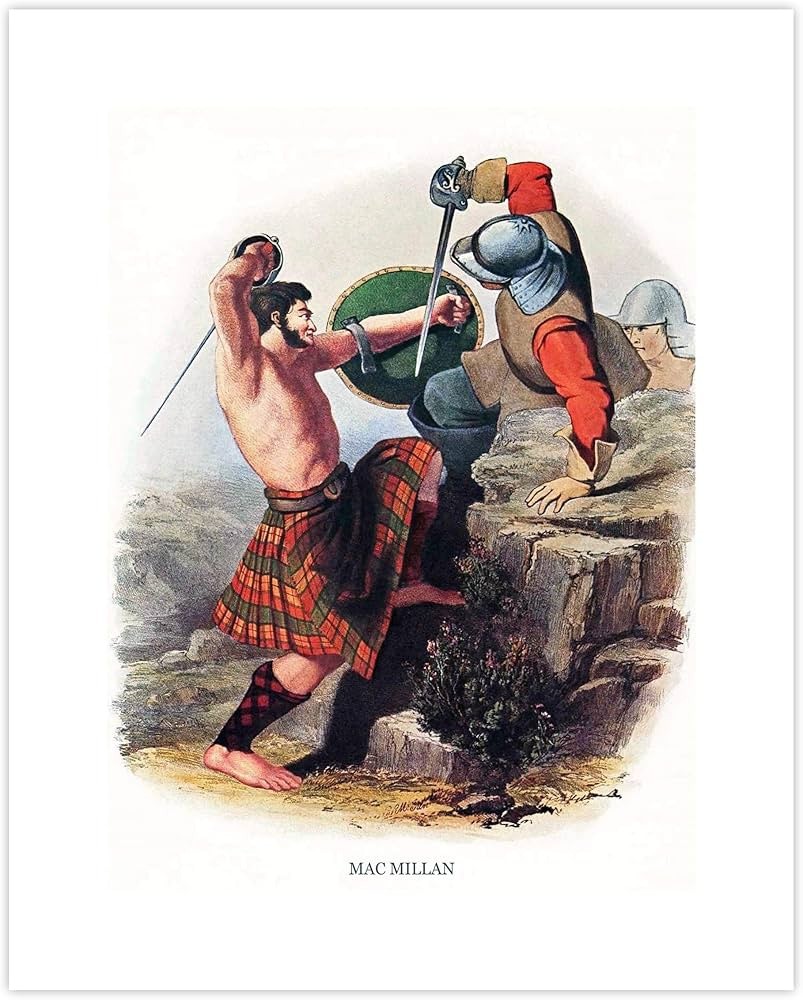
The generational side of cliù is quite similar to hamingja, in the sense that this can be passed down through the generations and even between households. If a father inherits good hamingja and adds to this hamingja, then his descendants will inherit an even greater store of happiness and good-fortune. When a father dies, he passes on not only wealth and land, but also his reputation, his luck, his fortune, even his debts and misdeeds; inheritance has a spiritual and generational quality to it, so the cliù that a man amasses is divided between his offspring going down in a chain, depending on the quality of his cliù.
Cliù is an all-encompassing virtue. To properly attain the highest reaches of cliù, one must exhibit many other virtues in service of the household, the clan, and the community. It is not something you easily attain at one sitting, rather, it is something you gain over time based on your accumulated actions and their effects. Positive actions produce good things for the community, and this raises one’s standing within the hierarchy; negative actions would have the reverse effect. To achieve these positive actions, one must actualize all other virtues and become something greater than he used to be – he must achieve arete and perfection, all for the glory of his clan.
“For a man to achieve all that is demanded of him he must regard himself as greater than he is.” ~ Johann von Goethe
As I've explained, to achieve this virtue, a man must reach beyond himself and achieve virtue in other areas. In my opinion, the two virtues which are most likely to increase a man's cliù would be hospitality and victory, for these two virtues have the most immediate positive effect on a community, and these two virtues are the most difficult to enact without failing. This possibility for failure would then summon the competitive, entrepreneurial, adventurous, and conquering spirit of the Aryan man, and he would be further driven to utilize all virtues so that he can be more hospitable and victorious. In his victory, he would earn the glory of clannish praise, and the honor of being recorded in bardic poetry as a hero.
The foundation of this honor culture can be traced back to the steppe with the Proto-Indo-Europeans and their *kóryos, meaning a “people under arms” but is better understood as an “army, war-band, unit of warriors” similar to the männerbund (German for “alliance of men”). These PIE systems evolved into the Gaelic fianna, bands of rogue warriors and outcast elites, mercenaries and honor-driven champions, brave heroes and dastardly hunters. In this ancient system, we find outcast boys being driven into the wild to live like wolves, only to return as men and loyal hounds of the tribe. This entire motif of the honor-culture of the canine-warrior can be perfectly encapsulated in how Sétanta earned his nickname Cú Chulainn (the Hound of Culann):
“…The servant who has been taken from me, that is, my hound, maintained life and honour for me. He was defence and protection for my goods and my cattle. He guarded all my beasts for me in field and in house.’’
‘‘That is no great matter,’ said the boy. ‘A whelp of the same litter will be reared by me for you, and until such time as that hound grows and is fit for action, I myself shall be a hound to protect your cattle and to protect yourself. And I shall protect all Mag Murthemne; neither flock nor herd shall be taken thence from me without my knowing it.’
‘Your name shall be Cú Chulainn (the Hound of Culann) then,’ said Catbhad. ‘I am glad that it should be my name,’ said Cú Chulainn. It were no cause of wonder that one who had done this when he was seven, should have performed a valiant deed now that he is seventeen years old,’ said Conall Cernach
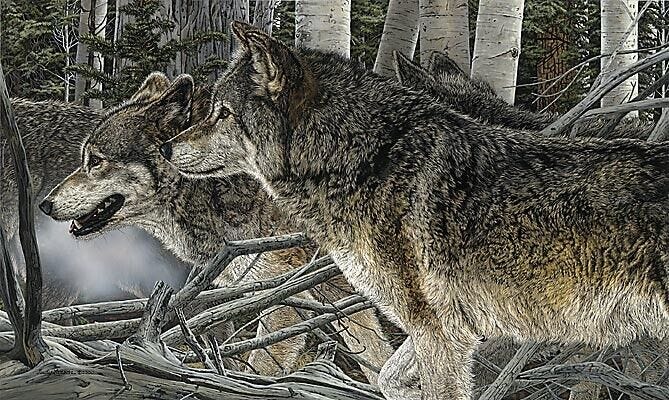
From these manly, authoritative, patriarchal systems, blood feuds become more understandable to the discerning eye. The rape of a wife or daughter requires justice; the death of a beloved clan member requires payment; broken trust and honor requires swift action and cattle raids. Such actions are born from strong men who have to fight for survival, not weak men who have everything in life handed to them on a silver platter. These ancient systems were born from necessity, and thus they grew into raging fires with central heroes often taking the stage. I will simply focus on some of my own noble clan chieftains, the lifeblood of my people, who both gained and lost great fruits and treasures through this ancient honor culture.
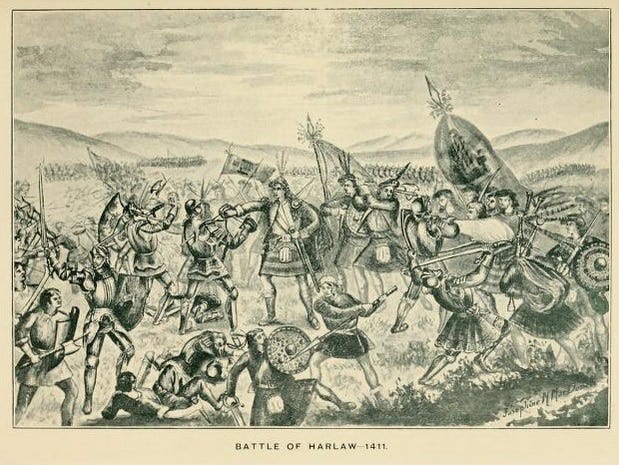
In 1411, Donald MacDonald, Lord of the Isles, led a substantial force of Hebridean and Highland clans into the earldom of Ross in an attempt to secure his claims, and those of his dependent sept-clans who sought to reclaim lost lands in Moray. To raise such a massive force, Donald called on every single existing bond and ties of kinship available to him and his compatriots, leading to many historians later considering Donald to have shown himself to be one of the heads of the Celtic race, capable of wielding thousands of Gaelic Highlanders against the Saxon Lowlanders. Of course, this attitude is only partly true, as there were foreigners and kinsmen fighting on both sides of the conflict. The Highlanders were met by a much smaller force of Norman and Scots knights led by Alexander Stewart, Earl of Mar, who represented the Crown’s interests. According to Somerled MacMillan, our historian: “On Donald’s side nine hundred are said to have fallen, among whom were Gilpatrick MacRory of the O’Beolan family, and Lachlan MacMillan of Knap, who, with Norman and Torquil MacLeod, were the first at the head of their men to charge the Lowland host.”
Lachlan MacMillan’s grandfather Malcolm Mor had gained possession of the lands of Knapdale through an alliance to the Lords of the Isles, and thus Lachlan (and all MacMillans) were often called to serve in the vanguard of the MacDonald’s forces. There exists clan lore that Lachlan was backstabbed by a fellow clansman right after breaking through Mar’s lines, and thus earned the honorific of “the Hero of Harlaw”, a title that shows up in MacMillan and MacDonald clan histories. Countless clans lost their patriarchal leaders in this great fight, destablizing many regions for future incursions by the Crown, even if they had been loyal to the Crown at Harlaw. This entire event is a prime example of how the clan chieftains and their honor system shaped the course of Scotland’s history, both good and bad.
Due to the waning of the Lords of the Isles, Lachlan’s son, Lachlan Og, brought the MacMillans into close alliance with other Hebridean clans such as the MacNeils and the Camerons. However, in 1429 at the Battle of Palm Sunday, Lachlan Og was massacred alongside countless Camerons when Clan Chattan and the Mackintoshes retaliated after a cattle raid committed by MacMillans and Camerons. In an attempt to hold onto his ancestral lands of Knapdale, Alexander MacMillan married the heiress of Clan MacNeil, Erca, and gained the stewardship of Castle Sween, a highly important fortress in the region. If there had been no bonds between Cameron and MacMillan, Alexander may never have suffered so greatly - if there had been no bonds between MacNeil and MacMillan, Alexander may never have gained such bounty.
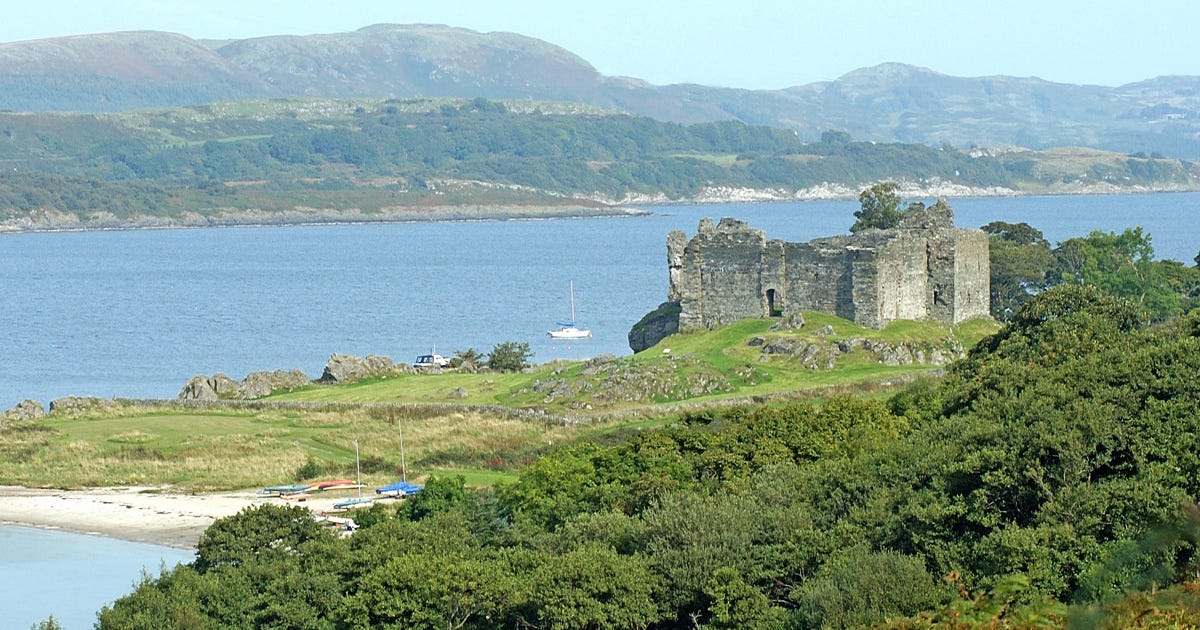
Eventually, Castle Sween was lost to the MacMillans due to being overtly loyal to the Lords of the Isles over the Crown, and our stone placed there by Malcolm Og was cast into the ocean and defaced, and the tower built by Alexander for his wife was occupied by an enemy clan. All that remained in the region with our name attached was a cross Alexander put down in memory of the family. Further chieftains of the House of Knap settled in South Kintyre at this time, until 1615 when the head of the family, Malcom, was slain and his son, Murachie, fled to Kilberrie where Erca’s dowry still held MacNiel lands. In like manner, his son MacMurachie was forced to abscond to Ireland after slaying his wife’s admirer in order to save her from dishonor (from this it has been assumed she had already been raped, but that the perpetrator was some higher noble from a related or allied clan, so the whole thing was swept under the carpet). This would not be so controversial if MacMurachie had simply taken the perpetrator to court, but the premeditated murder might mean that it was indeed a defense from a future abduction of his wife. All of this strangely coincides with the rise of the Dunmore MacMillans and the obtaining of new lands right when MacMurachie loses his, leading to many assuming that they benefitted from this line of events. An interesting aside here is that the House of Knap was said to have died out with MacMurachie, and yet the House of Dunmore descends from the same stock through a different cadet-branch, and the Murlaggen MacMillans are directly related to the MacMurachies through similar cadet-branches.
The purpose of an honor culture is to instill the noble virtues, to create a society of high-trust, where bonds of blood and religion are enshrined and upheld by loyal households. This is why Scotland fought so hard to keep a Divine King, and why Ireland fought so hard for a free Ireland. This is why the devastation of the clan system was a requirement if any foreign force wanted to conquer the Gaels. The clannish sentiment should be easy for a fellow European to understand, for this attitude was once common across our continent. The honor of the Gael simply stands bright and colorful over the rest, like a crowning jewel of cattle raids, clan feuds, and glorious last stands against dark rising tides of foreign change. In the twilight of the Celt, we still see remnants of this ancient honor culture shown forth in figures like myself, one of the lone voices of the diaspora who is not liberal and who advocates for our ancient rights and privileges.
Hail the Gaels! Hail the ancestors! Hail victory! Thank you, and good-end. o///
Hi there,
I have been trying to learn Gàidhlig for nearly 6 years now, but struggling with it. Tha Gàidhlig uabhasach agam! Do you have your references for the above narrative please? Who is it who accused Gaels of 'racism' for wanting to celebrate being Gaels? Where do you draw your timeline for 'The Gaels' tribalism? It's my understanding that Gaels appear to have an origin somewhere in the Middle East/Turkey, are there still remnants there? Is that not where the original tribe(s) started? Also, if we go back ~80,000 yrs, all nations outside Africa were started by a small band of homo sapiens who left across the Africa-Arabia land bridge. Given the impossibility of there being any distinct genomic traits as a result of evolution over such a small geological time for small tribes (such as the Gaels), other than percentages of neanderthal/denisovan fragments from east to west, how would one go about 'claiming' Gàidhlig origins? You narrative is rich and wonderful, I'm just curious what archaeological facts it is built on.
Sectionalism Archive would be proud of this ethnography